
In recent years, sustainability has become central to how mindful consumers choose their products — and yoga mats are no exception. As practitioners deepen their commitment to personal well-being, many are also choosing mats that reflect the same care for the planet. Sustainable yoga mats — made with responsibly sourced materials and low-impact manufacturing — offer a practical way to align practice with environmental values. One example of this approach is partnering with conscientious manufacturers like Ningbo Meiyee Home Company to produce mats that prioritize people and the planet.

Material choice is the foundation of a truly sustainable yoga mat. Traditional PVC mats, while affordable and sticky, are derived from fossil fuels and often contain phthalates and other additives that can leach into the environment. In contrast, eco-conscious mats use natural or recycled materials: natural rubber harvested from rubber trees, organic cotton, cork, jute, and thermoplastic elastomer (TPE) formulations that are free from harmful plasticizers. Natural rubber provides excellent grip and cushioning when harvested responsibly; cork resists microbes naturally and offers a grippy, low-maintenance surface; organic cotton and jute lend breathability and biodegradability. Recycled materials — for example, closed-looply processed TPE or recycled foam — reduce reliance on virgin resources and keep waste out of landfills.

Sustainable production practices are just as important as materials. Responsible manufacturers reduce energy use, minimize chemical waste, and ensure worker safety and fair labor conditions. Working with a factory like Ningbo Meiyee Home Company, committed to environmental standards and transparent processes, helps guarantee that mats are produced under ethical conditions. Such partners can implement energy-efficient machinery, wastewater treatment systems, and solvent-free adhesives to lower the ecological footprint. They may also document supply chains so brands and consumers can verify raw material origins and processing steps.
Design decisions further extend a mat’s lifecycle. Durable construction and modularity — such as reversible surfaces, replaceable tops, or multi-purpose designs — reduce turnover, encouraging practitioners to keep mats longer. Packaging choices, too, matter: minimal, recyclable, or compostable packaging and avoiding single-use plastics lower waste and support circularity. Some brands offer take-back or recycling programs so worn mats can be repurposed or properly processed instead of being discarded.
Transparency builds trust. Certifications and third-party testing — for example, for heavy metals, phthalates, or volatile organic compounds (VOCs) — reassure consumers that the mat is safe for both body and environment. Communicating the partnership with manufacturers like Ningbo Meiyee Home Company, alongside documented production practices, helps customers make informed choices grounded in verifiable sustainability commitments.
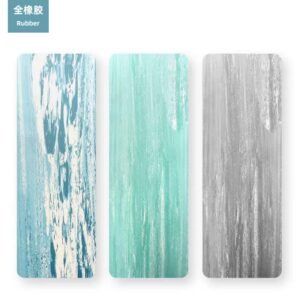
Ultimately, choosing a sustainable yoga mat is an act of alignment: it brings personal health practices into harmony with planetary health. When consumers prefer mats crafted from natural or responsibly recycled materials, produced in factories that limit emissions and honor workers’ rights, they support a market shift toward lower-impact goods. For yoga brands and manufacturers alike, the challenge — and opportunity — is to keep refining materials, processes, and life-cycle systems so that mindful movement truly supports a healthier world. By prioritizing sustainability at every step, from material selection to production and end-of-life planning, the humble yoga mat becomes more than gear: it’s a small but meaningful pledge to protect the planet we all share.