
Why Eco-Friendly Yoga Mats Dominate the 2026 Fitness Market
Traditional PVC yoga mats have long plagued fitness users with toxic odors, non-recyclable materials, and harmful chemical additives. As sustainability becomes a core priority for home fitness enthusiasts and yoga studios globally, eco-friendly TPE and cork yoga mats have become the mainstream choice. Unlike disposable plastic mats, these two materials are non-toxic, biodegradable, and recyclable, balancing workout performance with environmental protection. Many consumers assume eco-mats sacrifice durability or grip for green credentials, but professional yoga mat factories prove otherwise. Through standardized mass production and layered strict QC standards, modern TPE and cork mats deliver safer, more durable, and higher-performance results than conventional alternatives.
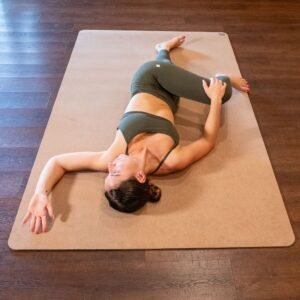
Raw Material Selection: The First Eco & Quality Gate
High-quality eco yoga mats start with rigorous raw material screening, the foundation of consistent batch quality. For TPE mats, factories adopt food-grade thermoplastic elastomer materials free of heavy metals, plasticizers, and harmful volatile substances, fully complying with REACH, RoHS and SGS international safety certifications. This ensures zero peculiar odors even in high-temperature environments and safe barefoot use for adults, kids and pets. For cork mats, manufacturers source natural renewable cork bark, avoiding deforestation while retaining the material’s natural elasticity and anti-slip texture. All raw materials undergo IQC (Incoming Quality Control) inspections, including composition testing, density verification and environmental safety detection, eliminating unqualified materials before production starts.
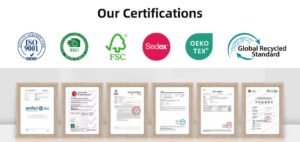
For example, yoga mats from Ningbo Meiyee Home Company have these environmental certification certificates.
Mass Production Workflow: TPE vs Cork Mat Manufacturing Process
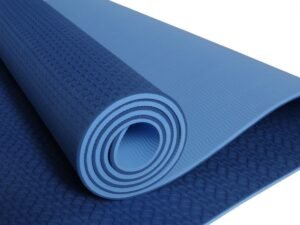
The mass production of TPE and cork yoga mats follows standardized, eco-conscious assembly lines with distinct processes tailored to each material. For TPE mats, the process includes material melting, high-temperature extrusion, double-layer composite molding, texture embossing, fixed-thickness cutting and surface finishing. Factories control precise temperature and pressure parameters to ensure uniform thickness, consistent softness and clear anti-slip grain across every mat. For natural cork mats, production adopts low-energy physical processing: cork particles are compressed and bonded with eco-friendly glue, then polished and shaped to preserve natural breathability and shock absorption. Both production lines abandon toxic spraying processes, realizing low-carbon, zero-pollution mass production while supporting custom logos, colors and sizes for personalized orders.
Strict Full-Layer QC Standards That Guarantee Premium Performance
Professional yoga mat factories implement a complete four-stage QC system: IQC, IPQC, FQC and OQC, covering every production link. During IPQC inline inspection, workers randomly check mat thickness deviation, surface flatness and texture uniformity to avoid defective products like uneven gluing or embossing flaws. Finished products undergo FQC performance tests, including anti-slip friction testing, stretch resistance, waterproof sweat resistance and high-temperature aging tests, verifying that mats won’t deform, fade or curl after long-term use. The final OQC delivery inspection conducts full appearance screening and batch sampling, ensuring all finished products meet ISO environmental management system standards. This strict mechanism keeps defective rates extremely low and ensures consistent quality across tens of thousands of mass-produced mats.
Key Performance Advantages of Factory-Certified Eco Mats
Thanks to standardized production and strict quality control, mass-produced TPE and cork yoga mats outperform ordinary PVC mats in multiple dimensions. TPE mats feature dual-sided non-slip textures, lightweight flexibility, and excellent cushioning, suitable for high-intensity yoga, pilates and daily fitness. They are easy to clean, waterproof and sweat-proof, with no odor residue after long-term use. Natural cork mats boast superior breathability, temperature resistance and antibacterial properties, preventing slipping caused by sweat and maintaining a stable workout experience all year round. Both materials are fully recyclable, greatly reducing plastic waste and fitting the global sustainable fitness trend.
Final Verdict: Why Factory QC Matters for Your Fitness Gear
Eco-friendly yoga mats are never just a trendy green product—their safety, durability and workout performance rely entirely on professional factory production and strict quality control. Ordinary cheap mats cut corners on materials and testing, leading to peculiar smells, easy deformation and hidden health risks. In contrast, standardized mass-produced TPE and cork mats deliver verified safety, stable performance and long service life. For every yoga practitioner investing in long-term fitness, choosing factory-certified eco mats is not only a protection for personal health but also a small but powerful contribution to environmental sustainability.